Today is Yom HaShoah, or Holocaust Remembrance Day. It is observed as Israel’s day of commemoration for the approximately six million Jews who perished in the Holocaust as a result of the actions carried out by Nazi Germany and its accessories, and for the Jewish Resistance in that period. I commemorated this important day by participating in the March of the Living.
Fifteen thousand Jews from forty different countries made the trek from Auschwitz to Birkenau. As far as the eye could see, there were young people joined by survivors, draped in and defiantly waving Israeli flags, walking along the same railroad tracks that brought millions to their deaths. In the celebrated words of Polish-born Rabbi Abraham Joshua Heschel, we were “praying with our feet.”
Our march, haunting and inspiring, culminated in the singing of Hatikvah on the site of the Birkenau concentration camp. There were joyous moments – so many young people remembering the dead, thousands of Jews singing and holding hands, and a man from Korea repeating in Hebrew over and over, “I have no words.” There were many heartbreaking moments – revisiting the selection platform where our accompanying survivor, Anneleise Nossbaum, said her last goodbyes to her favorite aunt, finding my relatives’ names in the huge Book of Remembrance, seeing the remnants of the Jews that the Nazi’s collected, and the raw personal testimony of Edward Mosberg, a 90-year-old Holocaust survivor wearing his striped uniform who, burning with rage, recounted the murder family. The day alternated between sunny and beautiful, and then pouring rain – a perfect reflection of our emotions that day.
Going forward, as there are fewer survivors and fewer hear the stories of loss and pain from those who experienced it firsthand, it is imperative we think of ways to transmit the memory and lessons of the Holocaust in ways that will resonate for the next generations. It’s our sacred duty and an absolute mitzvah to carry these stories forward — and bear witness for those who can’t.

Edward Moser and is granddaughter

My memory plaque on the train tracks

Beginning the march

The other side of my memory plaque

Birkenau

Anneliese, her daughter and granddaughter entering Birkenau

The Korean supporter
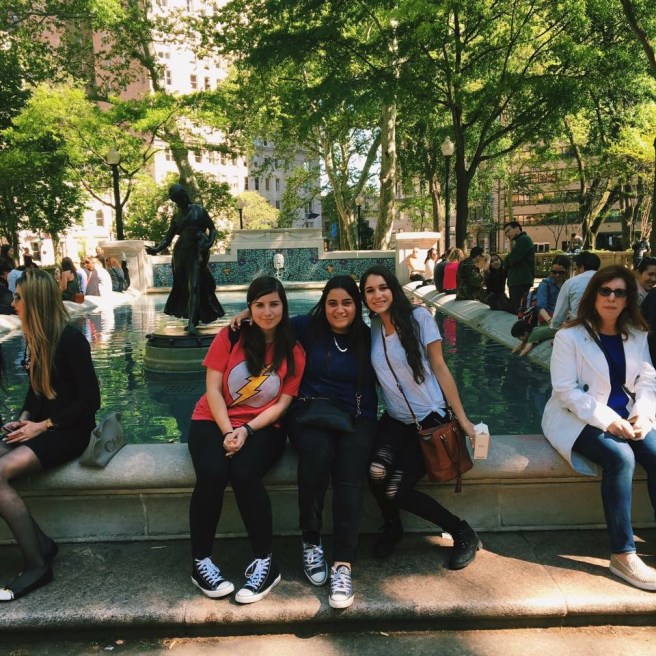 Yes, I already did a post on Hachnassat Orchim, when I welcomed my Tribe guests to my home for dinner. This is a different focus of the same mitzvah – welcoming strangers. Providing hospitality to strangers has its roots in biblical times, when Abraham opened his tent to three strangers. In Pirke Avot 1:15 we are taught, “Let your house be opened wide and let the poor be members your household.”


 Mitzvot Anecdotes