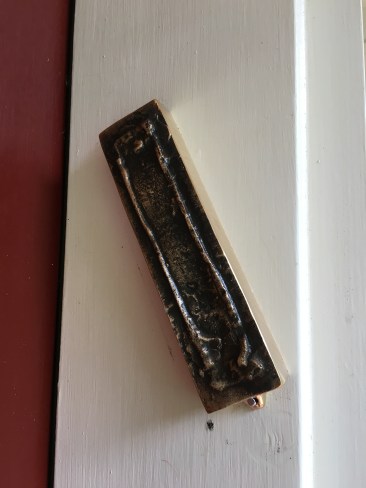
In the Torah, God has commanded us, “And you shall inscribe them on the doorposts of your home, and on your gates” (ibid., verse 9). Hence the mezuzah: a parchment scroll inscribed with the verses of the Shema prayer is affixed to the right doorpost of every room in a Jewish home. The mezuzah is also a symbol of God’s watchful care. The name of God, Sha-dai, which appears on the reverse side of the parchment, is an acronym for the Hebrew words which mean “Guardian of the doorways of Israel.” Placing a mezuzah on the doors of a home or office protects the inhabitants—whether they are inside or out.
The mezuzah pictured above is a product of the project “Mezuzah From This Home” by the Judaica design brand Mi Polin (“From Poland”). The company was founded by a young Polish couple: Helena Czernek, 29, a designer, and Alexander Prugar, 30, a photojournalist. Helena was a member of the Warsaw Moishe House, which our Jewish Federation Funds in part. Mi Polin marks the first time Judaica objects are designed and produced in Poland after the Second World War.
According to the literature that came with my mezuzah, Poland had 3.5 million Jewish inhabitants before WWII. In almost all of the Jewish homes, there was at least one mezuzah. During the war, almost all of the Jews perished and the mezuzot are gone forever. Only empty holes are left. Helena and Alexander make molds of the holes and nails, the traces, where these mezuzot once lay. These traces are witnesses for the Jewish inhabitants in Poland, an emptiness and symbol of those who passed away.
This particular mezuzah is from a tenement house at 8 Mostowa that was built sometime between 1868 and 1873 in Krakow. The owner of the building was Abraham Lednitzer. He also had a prayer house built in 1907 in the backyard, which is now used as a workshop. This bronze cast is from the mezuzah on the doorframe in apartments 18 and 19. The Steiner family lived in apt. 19: Chasel Jakub (1894) and his wife Sheindel Matel (1898), and their children Fela (1918), Bronistawa (1921), Szaja (1923) and Pinkus (1930). Records show that Fela and Szaja were transferred to a different apartment in 1941 and then sent to Lubicz camp. Probably none of them survived.
Now I have the trace of their mezuzah on my front door. I will remember them each time I enter my house. Never forget.




 Yes, I already did a post on Hachnassat Orchim, when I welcomed my Tribe guests to my home for dinner. This is a different focus of the same mitzvah – welcoming strangers. Providing hospitality to strangers has its roots in biblical times, when Abraham opened his tent to three strangers. In Pirke Avot 1:15 we are taught, “Let your house be opened wide and let the poor be members your household.”


 Our 2016 tennis season has begun! Once again, I am the captain of the Matchmakers. We play out of Radnor Valley Country Club on the USTA 3.0, ages 40+ team. No one wants to be the captain, so I stepped up and took over so that we could have a team. Being captain involves recruiting players, communicating with the other captains, setting up a practice time, communicating with the players (before and after a match), making sure we have enough players each week, working closely with Coach Ken, puzzling out the schedule in case of rain, reworking the lineup when players are injured/sick, overseeing the lunches that our club provides on home matches, etc. It’s a pain in the butt, but I do it because I love the team and enjoy our season. No, I don’t get paid. It’s another Mitzvah from the Heart.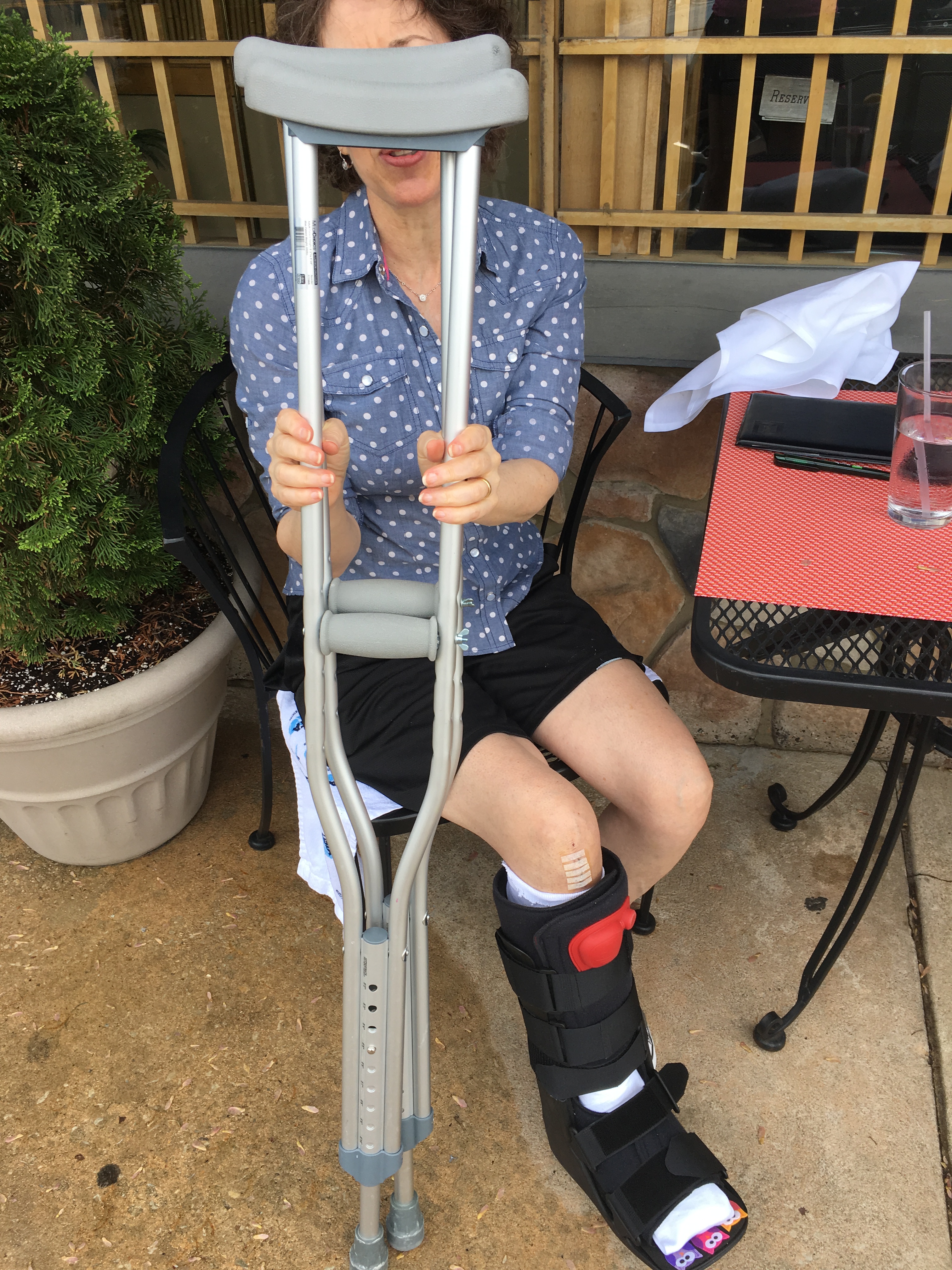

 Mitzvot Anecdotes